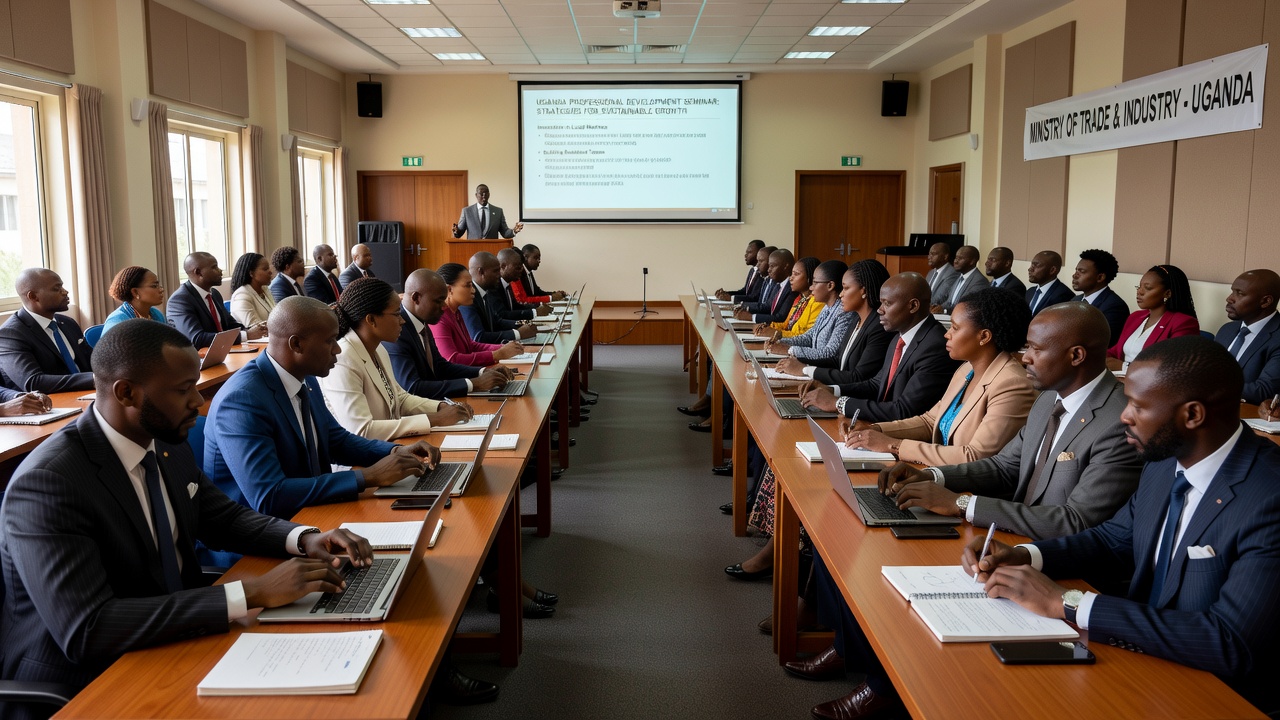

Across twelve years of working with Uganda's most ambitious professionals — from junior executives at Stanbic Bank to senior civil servants in the Ministry of Finance — one pattern emerges with striking consistency: the gap between effective management and truly transformative leadership is defined not by technical skill, qualifications or seniority, but by daily habits.
Management is about getting things done. Leadership is about inspiring others to want to get things done — and to bring their best selves to the work. The distinction sounds abstract, but in the day-to-day reality of a Ugandan office, board meeting, or field team, it is immediately visible.
Here are the five habits we observe, consistently and across sectors, in Uganda's genuinely great leaders:
1. They Listen to Understand, Not to Respond
In Uganda's hierarchical workplace culture, listening — truly listening — is a radical act. Most senior professionals have been trained, consciously or not, to listen defensively: waiting for the moment to correct, redirect, or assert their position. Great leaders, in our experience, do something fundamentally different.
They listen with the explicit intention of being changed by what they hear. They ask clarifying questions. They paraphrase what they've heard before they respond. They make it safe for junior colleagues to contradict them, because they understand that the best ideas rarely come from the top of an org chart.
This habit takes practice, especially for professionals who rose through systems that rewarded confident assertions over curious inquiry. But the return on investment is extraordinary: teams led by genuine listeners generate more ideas, surface problems earlier, and demonstrate measurably higher levels of commitment.

2. They Give Feedback as a Gift, Not a Weapon
Feedback is the lifeblood of professional development, yet it remains one of the most underutilised tools in Uganda's workplace. Two dysfunctions dominate: either feedback is withheld entirely — because direct criticism feels culturally inappropriate — or it is delivered in ways that shame rather than develop.
Great leaders have learnt to treat feedback as an act of care. They give it promptly — not saving it for annual reviews. They make it specific and behaviour-focused: not "you're disorganised" but "I noticed the Monday report was delivered three hours late this week — I'd like to understand what happened and how we can solve it." They balance the challenging with the affirming, and they always close with a forward-looking question: "What support do you need from me?"
- Specific and recent: tied to observable behaviour, not character judgements
- Private: corrective feedback is never given in front of colleagues
- Dialogic: always opens a conversation rather than closing one
- Forward-focused: ends with a commitment to action and support
3. They Invest in People Visibly and Deliberately
Good managers develop the skills of their teams incidentally — through task assignment and occasional correction. Great leaders invest in their people's growth deliberately and visibly: they sponsor high-potential team members for trainings and conferences, they advocate for salary reviews, they introduce junior colleagues to senior contacts, and they take genuine pleasure in seeing those they lead surpass them.
This is counterintuitive in a professional culture where information and access are often hoarded as competitive advantages. But the data from our 12 years of engagement is unambiguous: leaders who generously invest in their teams consistently deliver better results, retain their best people, and build the reputations that open the most significant doors.
4. They Manage Their Energy, Not Just Their Time
Every professional in Uganda knows how to manage a calendar. Far fewer have learnt to manage their energy — the physical, emotional, and cognitive reserves that determine the quality of presence they bring to their leadership in each interaction.
Great leaders have developed what we call "energy disciplines": consistent sleep habits, strategic use of prayer or reflection time, physical activity, and deliberate transitions between professional and personal contexts. They understand that showing up to a team meeting depleted or distracted is not just personally damaging — it signals to their team that they are not worth full attention.
5. They Lead with Consistent Values, Not Situational Convenience
This is perhaps the most important habit — and the rarest. Uganda's most trusted and effective leaders have developed a set of core values that they refuse to compromise when pressured, when convenient, or when no one is watching. Integrity, transparency, fairness: these are not aspirational words on a vision statement but operational commitments that govern every decision.
Teams notice immediately when a leader's stated values diverge from their observable behaviour. The trust erosion that follows is catastrophic and extremely difficult to rebuild. By contrast, leaders who behave consistently — who say the same things in private that they say in public, who apply the same standards to themselves that they apply to others — build a depth of followership that no incentive programme can replicate.
Developing These Habits: The Sandstone Vista Approach
These five habits are learnable. They require sustained practice, honest self-reflection, and often the outside perspective of a skilled coach who can see the blind spots that proximity to our own patterns makes invisible. This is precisely what our Leadership Development programme is designed to deliver.
If you recognise yourself in the "good manager" rather than the "great leader" description — if you suspect that your technical capability has outpaced your relational and self-leadership skills — we'd welcome a conversation. The transition is achievable, and it begins with a single honest question: what kind of leader do I want to be?